
Understanding Pattaya’s Rainy Season: When & How It Happens
Pattaya experiences the typical Southeast Asia tropical monsoon climate, with its rainy season typically lasting from May to October. During this period, heavy rains and occasional thunderstorms are common, bringing much-needed relief from the hot and humid conditions of the dry season. Although the rainy season in Pattaya technically starts at the end of the Songkran festival in early April, the nastiest and wettest months are usually September and October, with frequent Biblical feeling downpours occur mainly in the afternoon or evening. While the rainy season can lead to temporary flooding, lots of puddles and damage in some areas, it also transforms the landscape into a lush, green paradise, which enhances the natural beauty of the Pattaya Area, especially around East Pattaya near Mabprachan Lake and the plethora of Pattaya’s golf courses.
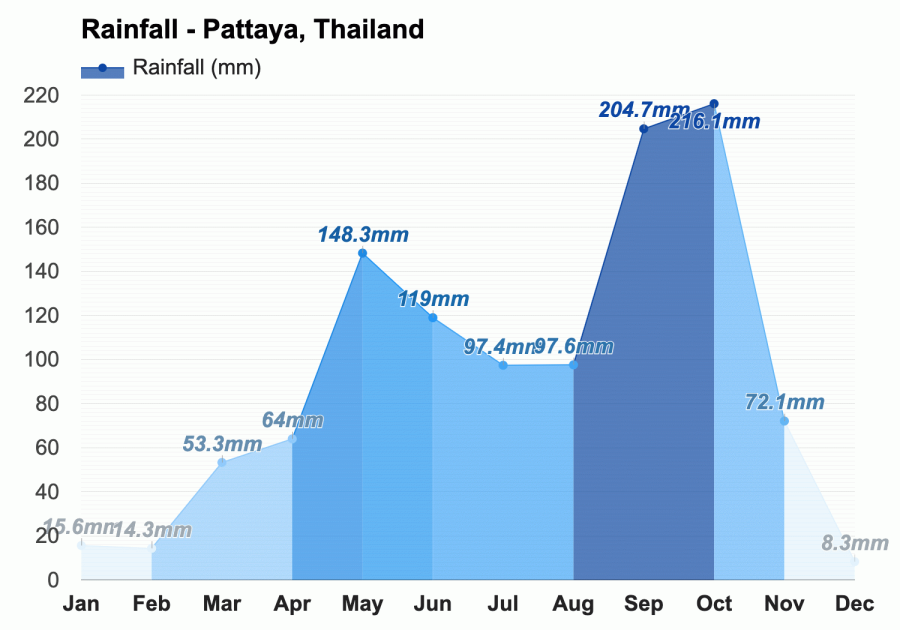
Comparing Rainfall and Flooding in Pattaya and Other Major Expat Areas in Thailand
Thailand’s most popular regions for expats to settle all have unique rainfall patterns and volume. Looking at the numbers, this is how Pattaya compares to the other most popular areas for expats in Thailand, looking specifically at the average annual rainfall and impact of local flooding (if any):
- Pattaya: ~1,100 mm per year – Moderate rainfall with brief but heavy showers, primarily from May to October. Being alongside the Sea, wind is also an issue blowing rain sideways which is not usually planned well for human dwellings. Flooding occurs in certain low-lying areas but usually subsides quickly due to improved drainage infrastructure.
- Bangkok: ~1,500 mm per year – More rainfall than Pattaya, with frequent urban flooding due to poor drainage in some areas, especially in central districts and near the Chao Phraya River. When it rains in Bangkok, expect a normal busy soi to turn into a sewage river with clusters of floating garbage bags moving down the street faster than the struggling automobile traffic.
- Phuket: ~2,400 mm per year – One of the wettest areas, experiencing extended rainy periods, especially from May to November. Some roads and beachfront areas may flood, but the hilly terrain helps with water runoff.
- Chiang Mai: ~1,200 mm per year – Similar to Pattaya but with more variation, as the northern region experiences drier months from November to April. Flooding can occur near the Ping River but is less frequent than in coastal cities.
- Hua Hin: ~950 mm per year – One of Thailand’s driest coastal areas, making it a popular destination for those looking to avoid excessive rain. Flooding is rare, except for occasional water accumulation in poorly drained areas.
- Koh Samui: ~1,900 mm per year – Distinct rainy pattern, with its heaviest rains typically occurring from October to December. Flash floods are common, particularly in areas with poor drainage and on steep roads. Do to it being a somewhat isolated island the flooding can really be a detriment to the lifestyle of any expats living there.
Each location’s climate plays a role in overall real estate desirability, optimal choice in type out housing (pool villa vs. penthouse condo, etc.), seasonal tourism, as well as lifestyle choices for expats.
Building and Maintaining a Pool Villa Home in Pattaya’s Tropical Climate During Monsoon Season
Building and/or owning a luxury pool villa in Pattaya is a dream for many, but the rainy season presents unique challenges for property owners, especially those living in houses and pool villas. In addition to the initial proper architectural planning is essential to ensure that homes are built with durable, moisture-resistant materials and adequate drainage systems as well as preparing for the unexpected such as typhoon force winds blowing water into places the architects, engineers and Pattaya house builders didn’t take into account. Features like elevated foundations, sloped driveways, and well-designed gutter systems can help prevent water accumulation and flooding. Maintaining a pool villa during the rainy season requires regular inspections of roofing, plumbing, and landscaping to avoid potential damage caused by excess moisture, mold growth, or erosion.
Expert Tip: Water drainage from your Pattaya House can lead to ugly water marks and discoloration to your house throughout the rainy season. Be sure your painters use the proper amount of primer and water retardant chemicals to treat your house when painting, it will save you a big headache in dealing with the aesthetics of the exterior of your prized pool villa.
How Pattaya’s Rainy Season Impacts the Real Estate Market
The rainy season influences the real estate market in various ways. On one hand, lower tourist numbers can lead to reduced rental demand, particularly for short-term vacation homes. On the other hand, savvy investors often find great opportunities during this period, as some sellers may offer lower prices due to seasonal slowdowns. Luxury property developments that emphasize weather-resistant designs, such as elevated villas with reinforced drainage systems, tend to attract long-term investors looking for a solid return. Despite the seasonal changes, Pattaya’s property market remains resilient, with demand for high-end homes continuing to grow.
Navigating Pattaya’s Roads and Transportation During Heavy Rain
Transportation can be challenging during the rainy season, as heavy rainfall sometimes leads to temporary flooding on roads. While Pattaya’s infrastructure has improved over the years, certain low-lying areas may still experience water accumulation, making driving more difficult. Motorcyclists, a common sight in Pattaya, need to exercise extra caution, as wet roads can be slippery. Taxis and ride-hailing services remain a reliable option for residents and tourists looking to avoid the hassle of driving in rainy conditions. Additionally, many luxury condominium and villa communities offer private transportation services to ensure residents can travel comfortably despite the weather.
Expert Tip: If you typically drive a car, truck or SUV, you can use Pattaya’s rain and even the flooding to your advantage! Since the typical chaotic swarm of motorcycles, tuk-tuks and other slow moving vehicles is usually drastically reduced during heavy rain, you can almost always get to your destination quickly if you adjust your plans to drive during the heaviest downpours.
How the Rainy Season Affects Pattaya’s Community of Golf Fanatics
Pattaya is home to some of Thailand’s most prestigious golf courses, attracting enthusiasts from around the world. However, the rainy season can disrupt golfing plans, with sudden downpours leading to course closures or delays. Fortunately, many high-end golf clubs in the area have excellent drainage systems, allowing play to resume quickly after rain showers. Some golfers even embrace the rainy season, enjoying cooler temperatures and less crowded courses. For those who prefer to stay dry, indoor golf simulators and private golf training facilities offer alternatives to keep their skills sharp while waiting for clearer skies.